
Die Application Gallery bietet COMSOL Multiphysics® Tutorial- und Demo-App-Dateien, die für die Bereiche Elektromagnetik, Strukturmechanik, Akustik, Strömung, Wärmetransport und Chemie relevant sind. Sie können diese Beispiele als Ausgangspunkt für Ihre eigene Simulationsarbeit verwenden, indem Sie das Tutorial-Modell oder die Demo-App-Datei und die dazugehörigen Anleitungen herunterladen.
Suchen Sie über die Schnellsuche nach Tutorials und Apps, die für Ihr Fachgebiet relevant sind. Beachten Sie, dass viele der hier vorgestellten Beispiele auch über die Application Libraries zugänglich sind, die in die COMSOL Multiphysics® Software integriert und über das Menü File verfügbar sind.

This example simulates Trichel pulses produced by negative corona discharge under a point-to-plate configuration. The electron density and the electric field are obtained, as well as the discharge current. The discharge current clearly shows the pulsating characters. Each current pulse ... Mehr lesen

This model simulates the propagation of a double-headed streamer in nitrogen at atmospheric pressure. Initially, electron-positive ion clusters were introduced between two parallel electrodes, subjecting the gas to a strong background electric field of 52 kV/cm. Subsequently, both the ... Mehr lesen

This model illustrates the working principle of an axial homopolar induction bearing. An electrically conducting rotor rotating in a magnetic field produced by a permanent magnets induces eddy currents on the conducting rotor. The eddy currents, in turn, produce a magnetic field that ... Mehr lesen

This tutorial model can be used to learn how to calculate mass and energy balances. Get a detailed demonstration in this blog post: How to Calculate Mass Conservation and Energy Balance Mehr lesen
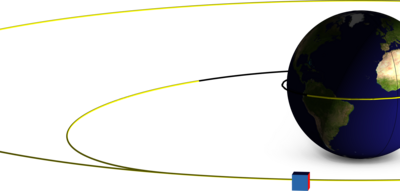
This model shows the workflow to define a transfer orbit trajectory with user defined orbit option. The direct solar, albedo, and Earth radiative thermal loads are analyzed during the transfer from low Earth orbit to geostationary orbit. Mehr lesen

In this example, the etching of silicon in a CF4/O2 plasma reactor is studied using a global model. Parametric sweeps for ion energy and oxygen mole fraction are computed. Mehr lesen
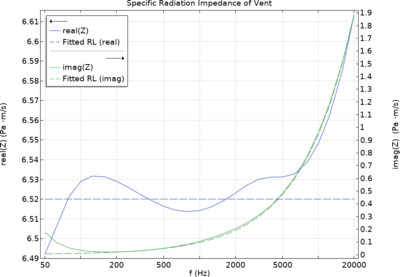
This model computes the specific acoustic radiation impedance of a very small circular vent in a flanged configuration. The model includes thermoviscous losses. The radiation impedance is fitted using a simple RL circuit which gives a simple lumped representation. The results are used ... Mehr lesen

Fluence rate is a key parameter for ultraviolet (UV) water purifier. It describes the amount of radiation that pathogens absorb and is then directly related to the disinfection level of the purifier. The aim of this example is to demonstrate the fluence rate calculation with the ... Mehr lesen

In microfluidic devices, it is a challenge to mix different fluids. One method is to use acoustic streaming to create a flow which enhances the mixing of two fluids. In this model, the vibrations of PDMS structures in a channel induces fast acoustic streaming used for mixing a diluted ... Mehr lesen

Bearing clearances should be kept minimum to avoid non-synchronous vibration of a rotor. However, a tight clearance reduces the durability of the bearing. This example illustrates modeling of the vibration induced by nonlinear contact for different radial clearances. It is shown that ... Mehr lesen


